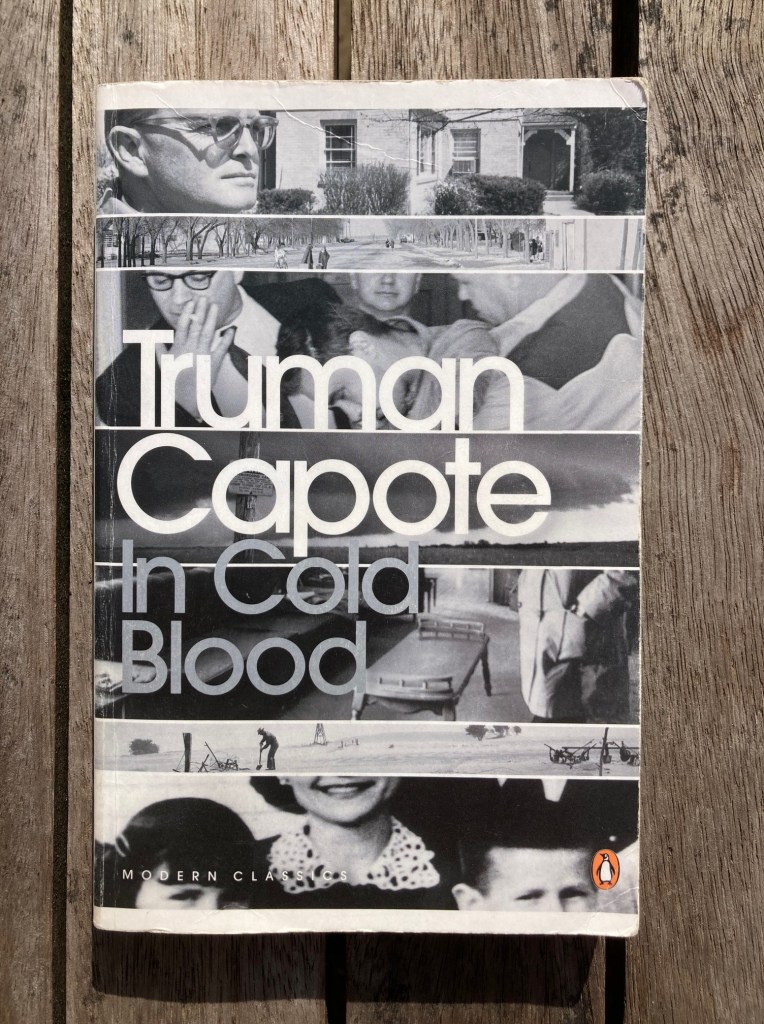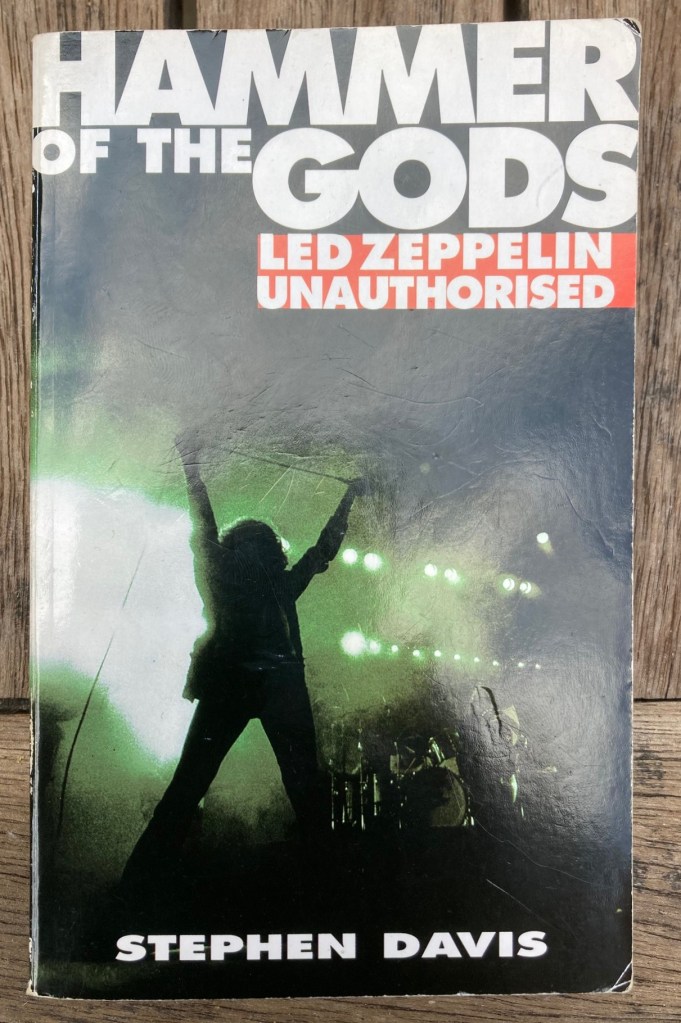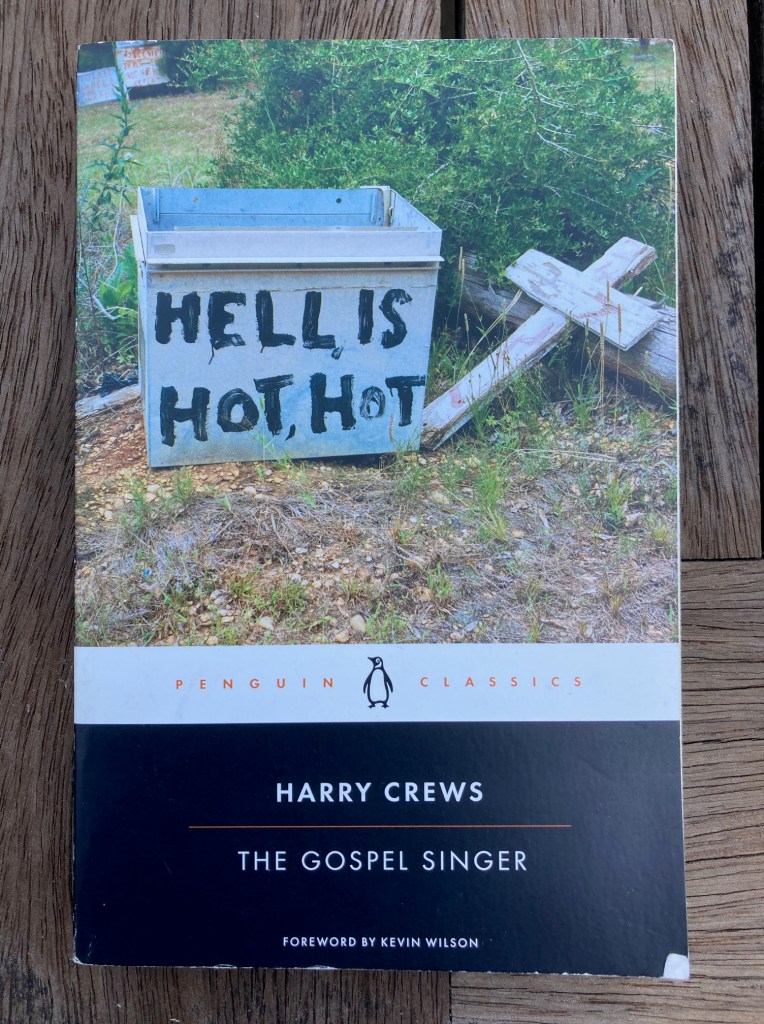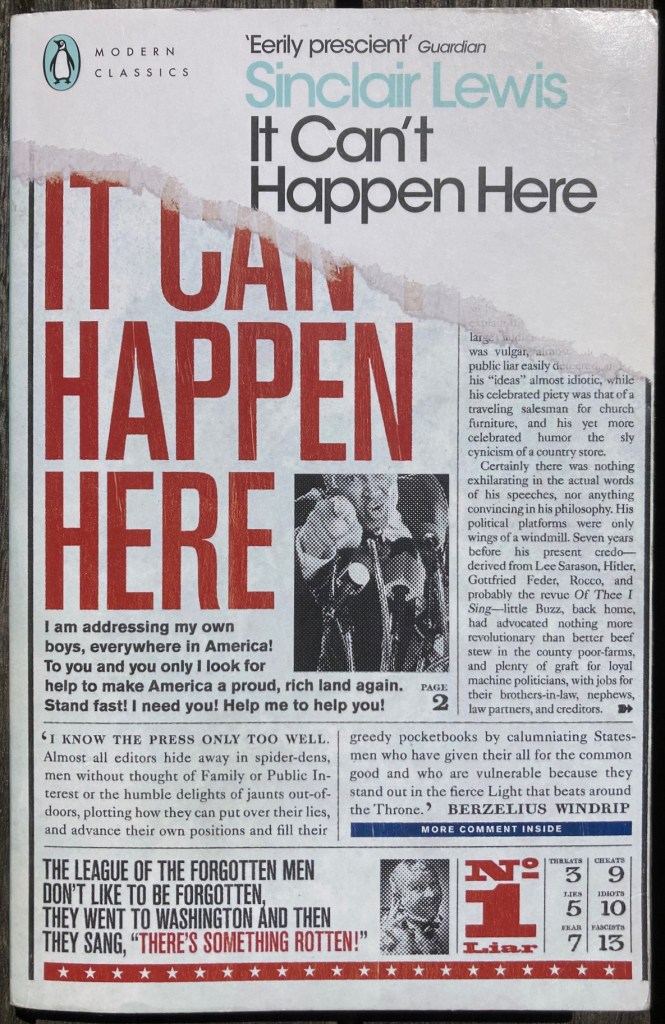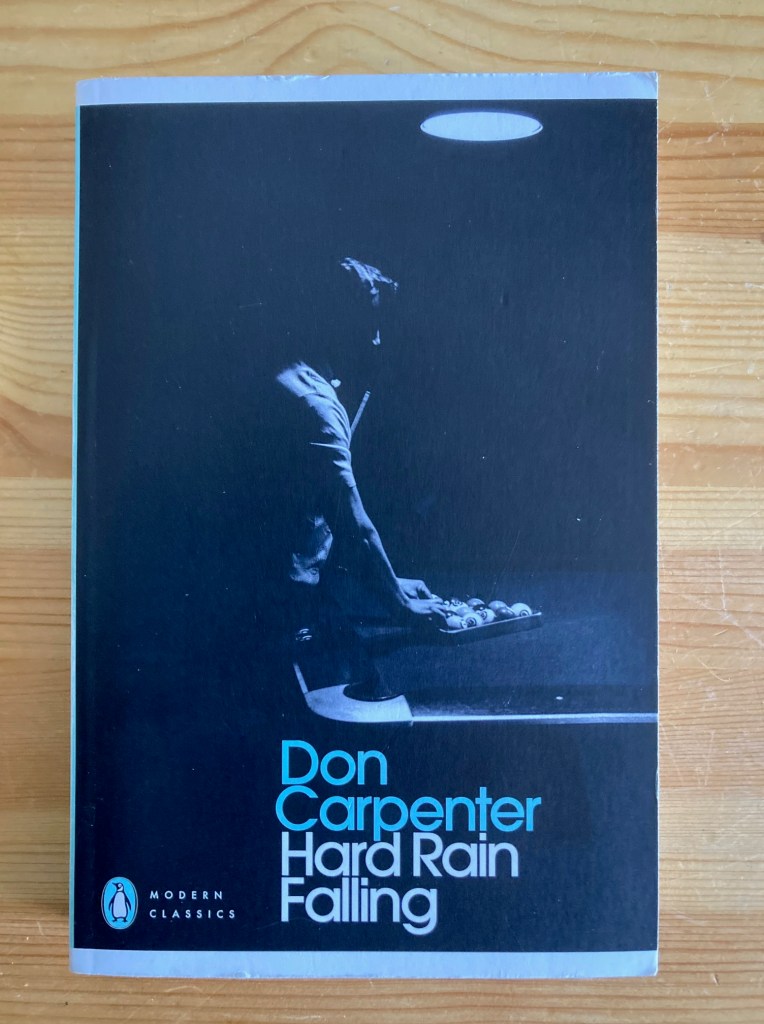
Winston ‘Tuffy’ Foshay and his gang want to make money over the summer. With this end in mind, Tuffy decides to run for office – or, this is book as the blurb would have it. This high-office caper is actually confined to the last third of the book, rather than actually playing a prominent part, and seems as unfocused as the other two-thirds of the book.
This lack of focus is indicative of the book as a whole, with the plot seeming like a distraction from Tuffy’s misadventures on the streets, Beatty’s rapid-fire satire and the cultural commentary. What the latter is actually trying to express is unclear, even with a second read. Based on his other, more recent books, Beatty does seem like he has a lot to say about the exclusionary nature of American politics,* but the lack of focus makes it unclear whether this is even the point of the book. Tuffy and his gang have moments of insight, but overall run a nihilistic course and, being ambivalent about nearly everything except for money and weed, it’s hard to invest in them as characters either. (Tuffy’s other interest – film – seems a shade too incongruous.) Maybe that’s the point, that the characters have no interest in belonging, akin to a modern day The Outsider, but if there are no stakes it’s hard to care as a reader either.
Bjarni, exiled from his settlement for five years for breaking an oath (and only indirectly for committing manslaughter), proceeds to make his way through the Viking world as a mercenary and sailor. What with being a solid Norse lad, this entails the expected abundance of seafaring and feuds. However, Sword Song was not entirely the picture of Viking life that I expected; Scandinavia is eschewed in favour of Viking settlements in the Celtic nations, and the non-martial aspects of Viking life, whilst not foregrounded, are given more space than I anticipated.
The slightly old-timey dialogue (‘Is it well with the bairn?’) and the use of placenames of yesterday (‘the Outer Isles’ for the Outer Hebrides and ‘Sutherland’ for the Highlands) lends it a feel of a time before lore, when homes were considered in a more fluid manner and certainly before the concept of a united kingdom. It is not always initially exactly clear where the story is taking place and I enjoyed this defamiliarisation, placing us in our protagonist’s calf-skin boots through five years of adventuring.
Its emphasis on adventure makes it a YA book (I mean, look at that front cover), although, while the violence is not gratuitous, nor is it shirked from. In Bjarni’s universe, whilst not a given, death by violent means is readily accepted. In other ways, the richness of details, especially on nature and boats, makes it a gratifying read as an adult: ‘Just where moorland fell away to machair a stream came down from the higher ground, pushing its way through a narrow glen suddenly and unexpectedly choked with trees-a-tangle, birch and rowan and willow and thorn’. This appeal to more considered tastes tempers the pace and prevents it from devolving into the monotony of just being sword fight after sword fight, which, conversely, is what I found hard work when I first bought this when I was 11 or 12 (RRP: £4.99) and sword fighting was a lot more important to me than bucolic vistas. Upon picking it up (20 years-plus later) I half-expected to DNF it again. Instead, I very much found the opposite: the break-up of the sword fighting is what helps make it a compelling read. The abundant descriptions of nature and place-setting that Sutcliff incorporates into her descriptions, without being overwrought, emphasises how these were peoples of the land and of the sea, and in a way, nation builders.
It feels well-researched, or at the least, convincingly researched, and both Norse and Christian mythology are touched upon, although they are not central to Bjarni’s worldview. These religions coexist, but primitive, brutal and tribalistic traditions abound in all wheres; feuds, funerals, how animals are treated, going into battle. With all of that said, the underlying zeitgeist is of an incremental shift from paganism to Christianity – the bigger picture paired with the individual experiences of Bjarni. Sutcliff also doesn’t shy away from incoporating the Vikings’ penchant for taking thralls – or slaves – and how some people did not have a chance to make their own way through the world.
I would have liked it if there had been a bit more introspection on Bjarni’s part: earlier on in the book ‘he was well enough content, though still there was an ache in him somewhere like the ache of an old wound when the wind is from the east’, but this is pretty much it. He seems to take five years of what seems to be regularly scheduled drama in stride, and is apparently content to wander with rarely a trace of homesickness.
Towards the end, he reflects upon how his people call home wherever they lay their head:
And suddenly, he was realising something that he had not realised before; that while he come of a people who could uproot easily, whose home was as much the sea as the land [Anghared] was of another kind […] She was flung out into a strange world that held nothing familiar, a cold place; he could feel the cold in her.
But there is little talk of how this strange, cold world has affected him. How has he changed by the end? I’ve not read any of Sutcliff’s other books, but as this was published post-humously (I don’t know if that included any of the writing and editing process), I suspect that this may have contributed to this slight sense of underdevelopment.
Living in southeast England, friends, family and well-wishers in general (you’d be surprised) are often alarmed when I mention that you can surf in the British Isles. Isn’t it cold? they ask. Yes, I say. Bring a wetsuit. Embrace the pain. The truth of the matter is that there is a lot of surf to be had; it’s just very much a geography-determined past-time. However, wherever you do go to catch a wave, they will be right about one thing: it will be cold.
As such – although only partially for this reason – surfing in the British Isles is sometimes seen as the poor cousin of what’s to be had internationally. And thus, the premise of Grey Skies, Green Waves is partially set up: our narrator and author, Tom Anderson, has come to realise that he doesn’t really like surfing in the British Isles anymore, given how much warmer, sunnier and, er, wavier, the rest of world is. He has fallen into a slump of surfing locally only half-heartedly.
The other part of the premise – and actually, given that Anderon grew up with the niche but all-consuming hobby of surfing, the more important part – is that he has hit a slump of entering surf competitions, only to drastically underperform. He sets out to remedy this case of ‘I don’t like the things I use to’ by taking more opportunities to surf in more domestic locales, and herein he accounts several surfing trips around the British Isles, extending from south to north Wales (including a secret spot in Cardiff), Devon, Cornwall, John O’Groats, the Outer Hebrides, the River Severn and County Claire.
Anderson is clearly a Good Surfer (surfing triple overheaders near John O’Groats is not for beginners, nor for improvers), and at points he captures the various sensations of being in the water vividly (‘A thick slop of heavy, cold, dark water is the surfing equivalent onto several feet of powder on a snowboard, or a big, smooth tarmac slope to a skater […] To bury your board onto its edge and then throw all your weight through an arcing turn, knowing the water below will bear everything you throw at it, it a feeling of at-oneness with the ocean that rivals any tube ride.’) As a surfer’s lexicon will attest, a wave is not just a wave: it has speed, height, depth, shape, direction and length. Anderson does this well, although certain passages merit a bit of secondary reading (for example, what is a ‘wedge’?). It is at its most engaging when describing being in the water in good conditions, and the more enthused about that particular session he is, the better that Anderson writes about it. As the book goes on, the stoke improves., and as such, the last quarter of the book is the best.
The other element of this book is back on dry (well, damp) land, capturing the ennui that accompanies not just surfing, but many outdoor pursuits, in the British Isles: early (cold) mornings, waiting in (cold) carparks for the right conditions to materialise (if they do), drinking away (cold) afternoons in pubs, disappointing competition results and late (cold) night drives home. Whilst overall I appreciate the inclusion of this other side of surfing, there were a few non-surfing sections that did not exactly make for compelling reading, such as the passage where he retells someone else’s story about accidentally trapping someone in an automatically cleaning French toilet.
It is written in the first person, which while fitting for a piece of travel writing, could have included fewer conversations recounted word for word via direct speech. Although sometimes this does place you in the moment, at other times it could have been a bit terser and not lost anything. Sharing the same past-time, it would be remiss not to mention William Finnegan’s Barbarian Days as a simultaneously accompanying and contrasting read, but given their different focus.
Worth reading? Yes – persevere through the discouraging sections.
Worth re-reading? Yes, for the passages in the water in particular.
The Forty-Year War in Afghanistan is a collection of twenty-six essays (and one exchange of letters) on the various occupations of Afghanistan, penned by the left-wing journalist Tariq Ali. It dates from 1980–2021, critiquing the Soviet occupation, the Afghanistan–Pakistan–US relationship (as well as the involvement of China and Saudi Arabia), through to the NATO withdrawal and the fall of Kabul to the Taliban.
Despite its disastrous ending, the invasion and occupation of Afghanistan is widely considered to have been a justified war (certainly compared to the invasion of Iraq). Ali gives this outlook short shrift, arguing that the NATO occupation repeated the mistakes of the Soviet one, such as installing unpopular puppet rulers (indeed, the subtitle is A Chronicle Foretold).
Looking at the occupation of Afghanistan in retrospect, and how badly it was managed and ended (and what life is now like for Afghans), it’s somewhat hard to argue that Ali doesn’t have prescient points to make. With hindsight proving him accurate on several matters, he regularly refers to his detractors’ contemporaneous criticisms that he is a cynic with a dark sense of humour.
He writes eloquently and his arguments are sophisticated. Because sophistication necessitates complexity, I would advise reading these commentaries one at a time, rather than treating this as a whole book: they’re not always the easiest pieces to read and digest, and being a series of essays, it’s not as comprehensive as a history book. There is plenty to learn, just not always in a straightforward format, and the bias is obvious (although I’m sure Ali would argue that these are just the facts).
However, a lot of the strength of his argument is drawn from how badly the occupation was managed (which he primarily believes was due to the corruption of the United States’ choice of new Afghan leadership and the failure to address elements within Pakistan and Saudi Arabia that supported the Taliban). This is slightly different to whether Afghanistan should have been invaded post-9/11, and there is a distinction to be made between ‘Was it justified?’ and ‘Was it well handled?’. If the occupation of Afghanistan had been successful (i.e., led to a reconstructed nation), would the invasion of it have then been justified?
As such, I wasn’t fully convinced by Ali’s argument that Afghanistan shouldn’t have been invaded post-9/11. He argues that Bin Laden should have been arrested and that the Taliban were ready to hand him over to the US:
It need hardly be added that the bombardment and occupation of Afghanistan has been a disastrous – and predictable – failure in capturing the perpetrators of 9/11. This could only have been the result of effective police work; not of international war and military occupation […] According to the official 9/11 Commission report, Mullah Omar’s initial response to Washington’s demands that Osama bin Laden be handed over and al-Qaeda deprived of a safe haven was ‘not negative’ […] but while the Mullah was playing for time, the White House closed down negotiations. It required a swift war of revenge. Afghanistan had been dominated the first port of call in the ‘global war on terror’, with Iraq already the Administrations’ first target […] Predictably, it only gave al-Qaeda leader the change to vanish into the hills.
My doubts come down to whether the Taliban would have actually done so, on which there are a myriad of conflicting sources. In The 9/11 Wars, author Jason Burke states that this was never going to happen.
I was also dubious about his argument that ‘What is really required in the region is an American/NATO exit strategy from Afghanistan, which should entail a regional solution involving Pakistan, Iran, India and Russia. These four states could guarantee a national government and massive social reconstruction in the at country.’ Given his own criticisms of Pakistan’s vested interests in its neighbour, I doubt that this measure would have led to a successful reconstruction.
Ali did, however, make me challenge my assumption that if Iraq hadn’t been invaded, the invasion of Afghanistan would have been successful. He argues that this occupation was mismanaged from the outset, criticising NATO’s selection of new, incompetent, corrupt leaders for Afghanistan, Hamid Karzai in particular.
While reading this, I tried to keep in mind whether I was reviewing a book or reviewing the justification and success of the Afghan war. Although not taken in by all of its arguments, Ali does ultimately make a convincing argument that the invasion was a misadventure and that the quality of lives for Afghans – perhaps the most important metric of the success of the invasion – has only gotten worse. Reading this in 2025, it is a saddening fait accompli.
Worth reading? Yes. Ali has a fairly rare opinion on the matter and it is interesting to read his arguments, whether you ultimately agree with them or or not.
The point of entry to this notorious book is that it is a Western, albeit, one closer to literary than genre fiction, with the primary theme being war, literal and spiritual, everlasting with man as its eternal maker. The scale is grandiose and the tone is Biblical. Considered to be one of the Great American Novels (comparisons to Faulkner, Melville, as well as Shakespeare, abound in the attendant literary analysis),* it’s a bracingly violent read.
The Mexican–American War, here, is presented as humanity’s nature writ large. Drawn from the diary of an American who signed up with the scalp-hunting Glanton Gang during said war,** McCarthy uses this (relatively) modern context to divine the nature of our species. The world in this book – which at times is quite distinctly the US–Mexican borderlands and at others could be neolithic – is the result. And what a thoroughly pessimistic exploration of human nature it is.
More plot- than character-driven, our protagonist, who is only ever named as ‘the kid’, is – as the lack of a name suggests – a figure with little expressed individuality or motivation except for a natural aptitude for violence. Born into a world lacking sentiment, his origin story is that he just wanders off from his home in Tennessee one day and never returns. From here, following an incompetent filibuster*** foray into Mexico made under the purview of Manifest Destiny (although throughout the novel, white men, Mexicans and Native Americans mete out violence with equally vicious proficiency), he joins the Glanton gang. Captain Glanton, being the sort of person you would move away from on public transport or in the pub, has been hired by the Mexican authorities to kill Apache. In the pursuit of money and steeped in the prosecution of colonialism, the gang soon devolve from regional assignments into killing anyone that they can: all scalps (referred to as a ‘receipt’ at one point) look the same by the time they are cashed in.
With that said, the kid and Glanton are in some ways a sideshow to what come to be the two main characters: the land and the Judge. Judge Holden is a driver of philosophical content, holding forth on the order of the universe and the nature of man frequently and extensively (a snippet: ‘It makes no difference what men think of war, said the judge. War endures. As well ask men what they think of stone.’) Abnormally big and completely hairless, he quickly comes to manifest as a supernatural being.
As for the land, the kid and the gang are outside nearly all of the time (brawling in tavernas is a recurring exception to this) traversing vistas colossal in scope, with the size of the open spaces often calling up references to other dimensions and worlds (‘The horses trudged sullenly the alien ground and the round earth rolled beneath them silently milling the greater void wherein they were contained’). The kid and the gang inhabit the liminal, with lots of descriptions of dawn and dusk and of being in places so remote and uninhabited (place names are rarely given) that they rightly seem like they should not exist in our world. It actually reached the point where it made me think of H.P. Lovecraft’s Weird Horror. This is coupled with frequent references to astronomy and the stars, but more in the sense of ‘you are alone in the universe’ rather than ‘isn’t this nice’. This is paired with descriptions of the wilderness so rich that there were times reading this where, minus the murder/scalping/raping/torture/freezing/dehydration/exposure/starving/theft/racism/getting shot, I wanted to be there, riding a horse, wearing a hat, being stoic. However, this is no bucolic, eco-primitivist treatise – man may be the one waging eternal war, but nature is a close second via sheer inhospitality. The various desert landscapes tend to reach the point of reading like hell: hot, empty (of nice things) and full (of the dead).
For those unaware, McCarthy has an idiosyncratic writing style, eschewing most punctuation and using what Wikipedia calls ‘polysyndeton’ (but which I think you and I can call ‘long sentences with no commas’). It is perhaps in Blood Meridian that McCarthy best encapsulates his grandiose, prophetic style, with archaic nomenclature abounding (you will need to bring your old-timey dictionary), somehow simultaneously terse and poetic, extravagant and as laconic as his characters. There is an embarrassment of riches in fantastic writing, but the ‘legions of horribles’ passage is a great example:
A legion of horribles, hundreds in number, half naked or clad in costumes attic or biblical or wardrobed out of a fevered dream with the skins of animals and silk finery and pieces of uniform still tracked with the blood of prior owners, coats of slain dragoons, frogged and braided cavalry jackets, one in a stovepipe hat and a bloodstained weddingveil and some in headgear of cranefeathers or rawhide helmets that bore the horns of bull or buffalo and one in a pigeontailed coat worn backwards and otherwise naked and one in the armor of a Spanish conquistador, the breastplate and pauldrons deeply dented with old blows or mace or sabre done in another country by men whose very bones were dust and many with their braids spliced up with the hair of other beasts until they trailed upon the ground and their horse’s ears and tails worked with bits of brightly colored cloth and one whose horse’s whole head was painted crimson red and all the horsemen’s faces gaudy and grotesque with daubings like a company of mounted clowns, death hilarious, all howling in a barbarous tongue and riding down upon them like a horse from a hell more horrible yet than the brimstone land of christian reckoning, screeching and yammering and clothed in smoke like those vaporous beings in regions beyond right knowing where the eye wanders and the lip jerks and drools.
Oh my god, said the sergeant.
Oh my god, said the book reviewer.
With this all said, this novel is certainly not for everyone. Criticism tends to focus on the lack of exposition and insight into any character (except for the judge), although my take on this is that this creates the very much intended effect that mankind is unknowable. This could also be said about any McCarthy novel, so you might already know whether you like this or not. The other common critique is that the violence is gratuitous. Admittedly, around page 200 it starts to feel like one long bender, akin to the anti-narrative of Suttree, but I felt this added to the effect of violence becoming its own purpose. The few female characters are also very minor, although, again, if you’ve read any other McCarthy books, you knew this already.**** My biggest criticism is that by a certain point the intensity of the descriptions becomes hard to process, although this a case of having a good problem.
As stated, where we come from, how we are and where we are going is here attested as thoroughly pessimistic. In McCarthy’s ouvre, if No Country for Old Men is the present and The Road is the future, then Blood Meridian is the past. The Kid’s refusal of the Judge at the end does suggests a rebuttal of determinism, although at the close it is a question without an answer.
Worth reading? Yes.
Worth re-reading? Yes.
‘The ultimate trade awaiting its ultimate practitioner’
*A body which includes my dissertation.
**Samuel Chamberlain’s My Confession: Recollections of a Rogue.
As with Mantel’s Wolf Hall trilogy, this hefty historical epic* covers the life and times of some great men of history, this time across the Channel and delving into a social rather than a theological upheaval: the French Revolution.
Told through the carouselling perspectives of three figures central to the revolution (plus a cohort of secondary characters), Georges D’Anton (later just the more streetwise ‘Danton’), Maximilien Robespierre and Camille Desmoulins, the scope is broad, starting with their childhoods in the French countryside, through to their schooldays, their respective moves to Paris, their careers as lawyers and their participation in the revolution. Besides allowing considerable breathing space for characterisation, this scope also effectively portrays how the revolution was as much a process as an event, which ultimately took place over some ten years.
In addition to this ambitious scope, Mantel also writes in great detail. As well as insights into the psyche of each character (as with Wolf Hall’s Cromwell, this is the element of fiction that accompanies the history of the meticulously researched events), it is ornately written, moving not just day by day but idea by idea, very much positing the idea that the revolution took place first in drops and then in rivers (of blood), with the factional struggles that came to characterise the revolutionary movement presented in ample detail. Besides the numerous factors, driving ideas and events of the French Revolution being funnelled through the perspectives of the three main characters, as well as the many, many secondary ones, the tense shifts a lot. At least some of this myriad of secondary characters was surplus to requirement, meaning that I had to flick back to the dramatis personae on a regular basis; more time spent with fewer characters would have resulted in a more focused narrative.
A Place of Greater Safety is partially a history lesson, but its subjectivity and intricate, ultra-focused (and fragmented) perspectives means that it would help to have a knowledge of the French Revolution before reading it.** This provides a segue back to my comment about ‘great men of history’: the novel, with all of its shifting perspectives and subjectivity, makes allowance for the counter-argument that broader social factors were just as responsible for the revolution as were the actions of any one particular figure. Here, events are sometimes seen as the drivers of these men, and sometimes vice versa.
How effective a comment this is upon trying to write a history upon a multifaceted event, and the element of confusion that must accompany being in the midst of a revolution, is up to the patience of the reader. There is a lot between the lines and keeping up this level of active reading for 770 pages is hard. It’s certainly an original approach and Mantel has a distinctive way of writing and you’re either going to enjoy its idiosyncrasies or run out of patience for it.
Worth reading? Yes, although I would start with a shorter Mantel novel to get an idea if you’re going to like her style of writing.
Worth re-reading? If you can handle it, yes. A second read would help a lot with comprehension.
*In what can only be called a daring effort, this, apparently, was the first novel that Mantel ever wrote (although not had published).
** I retroactively did so via The Rest is History podcast.
Edition read: Penguin Modern Classics, 2012, 150 pages
Read: October–November 2025
Spy fiction
*Spoilers*
Here in le Carré’s first novel, we meet George Smiley, who, not for the last time, is set up as a cuckold who is about to be fired for someone else’s mistake,* but subsequently proceeds to kick clerical ass and take down possibly important names, dates and locations via diligent observation.
The premise is that a civil servant has committed suicide after a routine security check – only for said civil servant to receive a phone call during the subsequent investigation. With an atmosphere of betrayal set up from the outset, the characteristic cut-and-thrust dialogue of the Circus (the secret service) is present, as is the jargon of the trade.
This is a slightly more forgiving read than something like The Russia House or Tinker Tailor Soldier Spy, with a bit more exposition provided (one character even gives another one a written summary in the form of a case report at the end). It’s also a relatively light read compared to le Carré’s subsequent works, with a lower body count and fewer characters reduced to disaffected cynics.
While clever, complicated and characteristically morally ambiguous, this isn’t le Carré’s best novel – Dieter, although an interesting character, it is a little bit hard to appreciate as the great opponent he is set up to be. Partially this is because this is quite a short novel, partially it’s because it’s hard to square away some of his characterisation: ‘[…] to Guillam he was a living component of all out romantic dreams, he stood at the mast with Conrad, sought the lost Greece with Byron, and with Goethe visited the shades of classical and medieval hells. As he walked, thrusting his good leg forward, there was a defiance, a command, that could not go unheeded.’ Eh? Although Dieter embodies the human side of the enemy, for a spy runner, that sounds a bit conspicuous. It is interesting, however, to read him as a prototype of Karla – the fanatic, faceless antagonist who comes to be Smiley’s nemesis and counterpoint. Nonetheless, it’s an engaging read, and I enjoyed working the case out along with the protagonists.
Worth reading? Yes. A good starting point for reading le Carré.
Worth re-reading? Yes…although I think there are better le Carré novels to re-read.
*To my knowledge, his forever cheating wife, Anne, never appears directly in any of the nine George Smiley novels. Having not read all of them, I ask you, dear reader, does she ever? Or is she always framed via Smiley?
The Sparrow is ostensibly a sci-fi novel, but really, sci-fi is the point of departure. Outline: the planet of Rakhat makes contact with Earth in 2019. The Jesuit Order decide that they’ve got this one, so off they go into space. We follow the crew along on their adventure, but we have already been told that only one member of the crew returns in 2059. Despite the premise of going to and living on another planet, technicality is eschewed in favour of ‘why’? As such, it is more about religion and faith. Nor is it about some outlandish alien religion or faith – it’s mostly the Jesuit Order.
This sounds like an incongruous pairing (‘priests in space’ sounds only one step away from a stoner song) but a central theme is how God chooses to show himself.* The characters ponder over this a great deal; when we push the boundaries of existence, how do we maintain belief in old systems? (especially when God taketh away, which he does deign to do here). In this sense, the genre – or maybe the context – of sci-fi is fitting.
The chronology jumps around, with the interplay between the two periods cranking up the suspense – we know that something went wrong on the venture, but the details are trickled out. The characters are sometimes cheerful to the point of incredulity, but this is a minor criticism of characterisation in a genre which carries a reputation for sacrificing well-rounded characters in all of the excitement of world-building.
Worth reading? Yes
Worth re-reading? Yes – a re-read is due on my part.
*The books sticks to ‘him’ for God, so we’ll leave it at that here too.
The sequel to Tinker, Tailor, Soldier, Spy,the plot is set in motion by the dissemination of Bill Haydon’s act(s) of betrayal.* It’s now 1974 and George Smiley and Peter Guillam are rebuilding the secret service, here always referred to rather archly as The Circus. The reinstated intelligence analyst Connie Sachs revisits investigations that Haydon had suppressed and finds what looks to be a money-laundering operation centred in Hong Kong.
Jerry Westerby is called back to London from rural Italy (where he had bolted to when he found out that Haydon had possibly betrayed him to the Soviets), where he is writing a novel (‘me neither’), ostensibly on leave from his journalistic duties, in which capacity he is sent to Hong Kong to follow this lead.
And just this much of the plot, comprising just the set-up of the premise, is complicated enough. As with his characters, le Carré’s plotting and dialogue is sophisticated and worldly.** I will be honest and say that I couldn’t follow the plot through every single juncture; the amount of exposition is limited, people talk in jargon (or not at all), and the amount of trail covering and switching and deliberate wrongfooting by spies and their handlers is byzantine. Guillam’s perspective is the closest that there is to the reader’s, with Smiley even gently mocking him at one point for not being able to piece together just what the hell everyone is up to and what it all means. However, despite this density and length (I found it useful to keep a dramatis personae), it’s a page turner. Besides the human element (why do all of these clever, erudite people seem so wretched?), the reader has to find out the answers and to see where it’s all heading at the same pace (if not a bit behind) as the – oft highly resourceful – characters. It does wander into James Bond territory just a bit when it turns out that Westerby, besides being a journalist and spy, is an expert on racehorses. Thankfully, Westerby – the titular honourable schoolboy – doesn’t turn out to be a winning jockey. By and large, instead of stunts, this is a world dominated by suspicion and sadness and full of fittingly distrustful and unhappy characters.
Worth reading? Yes.
Worth re-reading? Yes. Read the Smiley novels in sequence.**
‘Not allowed a past in this game. Can’t have a future either.’
*In an uncharacteristic bit of narrative leniency from le Carré, the first page provides all the exposition you need to bring you up to speed. However, I still recommend reading Tinker, Tailor, Soldier, Spy beforehand.
**‘“The case has firmed up a little, so perhaps it would be sensible to fix a date. Give us the batting order and we’ll circulate the document in advance.”
“A batting order? Firmed up? Where ever do you people learn your English?”’
Edition read: Pan Books, 1961 (original price: two and a half shillings), 189 pages
Short-story collection, Realism
*Spoilers*
The Loneliness of the Long Distance Runner was recommended as an accompanying text whilst I studied Sillitoe’s Saturday Night and Sunday Morning. I didn’t get around to it before graduating, or that decade, or before a young angry man phase myself,* but that wasn’t for lack of enjoyment of Saturday Night and Sunday Morning; besides its snapshot of a (sometimes) angry and (quite often) rebellious character, I enjoyed its complexity and how it tested my assumptions about working-class literature. The Loneliness of the Long Distance Runner is a series of short stories by Alan Sillitoe that cover the similar grounds of disillusion within and rebellion against post-World War Two Nottingham society – which here, is urban, poor, oft violent and subject to officious authority.
These characters – who are men, generally young, but not always angry – have enough to scrape by. Some of them have even attained a degree of economic security. But they never have enough to have become aspirational. Very much aware of their place in society, they are cynical enough to be rebellious rather than revolutionary, typified by the climatic action of the protagonist of the eponymous story. The one mention of socialism comes from a factory worker’s middle-class wife, while the factory worker himself is too tired after a day of work to engage in any talk of politics.
Socially alienated and with bleak prospects, there is lots of petty crime (mostly theft) – but also some more measured slices of life, such as Mr Raynor the Schoolteacher,The Fishingboat Picture and Noah’s Ark. Nothing terrible happens (at least, not in the foreground of the stories), but neither does anything wonderful. This is a lot in life which the characters, except for the more rebellious ones, accept stoically. In Noah’s Ark the naughty children sneak their way into having a free go on a fairground ride. Even at this young age, they have already figured out that deception alone will get them ahead, and even then, fleetingly, in an otherwise hardknock life.
Sillitoe is a deft and observational writer, capturing unusual events in unremarkable environments. Besides capturing the Nottingham accent (‘“We’ve spent all our dough,” he said, “and don’t have owt left to go on Noah’s Ark wi”’) there are some clever premises for stories – such as the lack of agency in life bleeding over into a failed suicide attempt (On Saturday Afternoon), and how the protagonist ‘disappears’ and reappears during his telling of The Disgrace of Jim Scarfedale. The quizzical nature of The Fishingboat Picture means that it doesn’t initially seem to have a point of entry, whether on a literal and subtextual level. Whilst it wasn’t my favourite, a couple of reads revealed it to be a commentary on the untidiness and complexity of relationships and how compromise sometimes gets us by.
The closing story, The Decline and Fall of Frankie Buller (actually followed by a long poem, The Rats) is the protagonist’s childhood memory of playing soldiers with a local man of around 20 who has learning difficulties. The social dynamics of the angry young man movement are absent; this is just a scrappy childhood memory, with a poignant open-endedness to it:
‘I watched him. He ignored the traffic lights, walked diagonally across the wide wet road, then ran after a bus and leapt safely on to its empty platform.
And I with my books have not seen him since. It was like saying goodbye to a big part of me, for ever.’
*More cross than angry, really. Here’s to austerity – we did more with less and we were all in it together!
Is this your new site? Log in to activate admin features and dismiss this message